

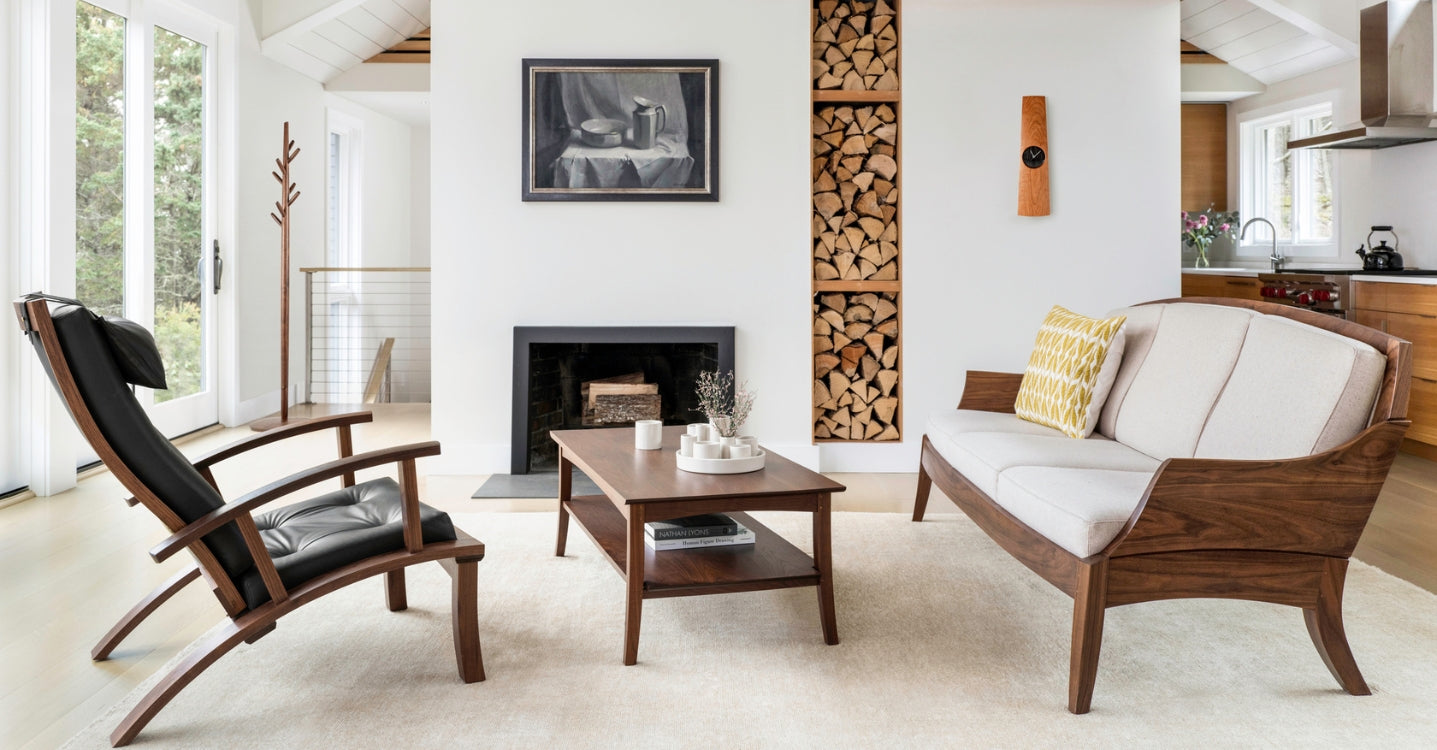
Found throughout nature in the whorls of a pinecone, the petals of a flower, or swirls of a seashell, the golden ratio is a design principle rooted in a mathematical sequence. This design principle has been employed for thousands of years. It can be found in famous artworks, such as Leonardo Da Vinci’s Mona Lisa and the architecture of Notre Dame and the Parthenon. For interior and aspiring designers alike, the golden ratio can be a reliable tool for achieving balance through color proportions, furniture placement, and complementary accent pieces. Symmetry or intentional asymmetry is vital in designing a room to attain cohesive functionality and visual appeal. Using the golden ratio makes the design feel organic and visually pleasing.
For practical application, the ratio is simplified to 60:40, more commonly known as the 60/30/10 rule. Understanding and using the ratio as a guide for different aspects of interior design can help you create a perfectly curated, cohesive, and comfortable environment.

The golden ratio can be found throughout nature in the petals of flowers, whorls of a pinecone, or swirls of a seashell.
Creating a Balanced Room Layout
The golden ratio helps achieve a balanced room layout by assessing the floor space covered by furniture. Striking the right balance means that nearly 60% of your room will have furniture in it, with 40% being clear. Contrary to the belief that geometric designs only involve sharp lines, circles, and arcs play a crucial role in adding intrigue to interior spaces. With their inherent sense of order and stability, squares can be represented through key furniture pieces like a dining table, bed, or sideboard.

Striking the right balance means that nearly 60% of your room will have furniture in it, with 40% being clear.
Circles, symbolizing unity and infinity, bring harmony to a room and can be mixed with bold geometric shapes for visual interest. For example, try curved dining chairs like our Auburn, Pasadena, or Aria to complement a table with hard angles, such as the Eastward, Edo, or Trestle. On the other hand, more linear chairs like the Edo or Eastward bring structure to round tables like the Georgetown Single Pedestal Table or Round Ring Table.
Choosing Furniture
Besides proper measurements, the golden ratio can guide your furniture selection by providing a proportional framework that aligns with the principles of balance and visual harmony. It allows designers and homeowners to make informed choices about the size, placement, and coordination of furniture within a space.

Using the golden ratio to align with the room’s architecture can help create a balanced and visually pleasing room composition.
When selecting furniture, it’s essential to consider the proportions of the entire room. The golden ratio of a room, which involves its height, width, and length, can influence furniture selection to achieve overall visual balance. Using the 60/40 rule, you can ensure the room is not overcrowded with furniture and achieve a cohesive, dynamic design by combining furniture in various sizes, such as sofas, beds, side tables, and dressers.

Art & Accessories
Applying the golden ratio when accessorizing your home will help you create a clean and thoughtfully curated space that feels well-proportioned. When hanging artwork, consider the rule of thirds. Select pieces that are one or two-thirds the size of the wall to give visual balance. For gallery walls, select pieces that are proportionate to one another and leave 60% of the wall blank to create a balanced feel. Consider the overall surface area when accessorizing side tables, coffee tables, and sideboards—allocate a larger percentage to items like trays, books, and lamps, and reserve a smaller percentage for smaller decorative items to maintain a clean, balanced look.
Understanding the golden ratio allows for its effective incorporation into various interior design elements, resulting in well-balanced and visually appealing spaces. Whether considering color schemes, patterns, furniture layout, or art display, the golden ratio is a valuable tool for achieving harmony and proportionality in design.


