

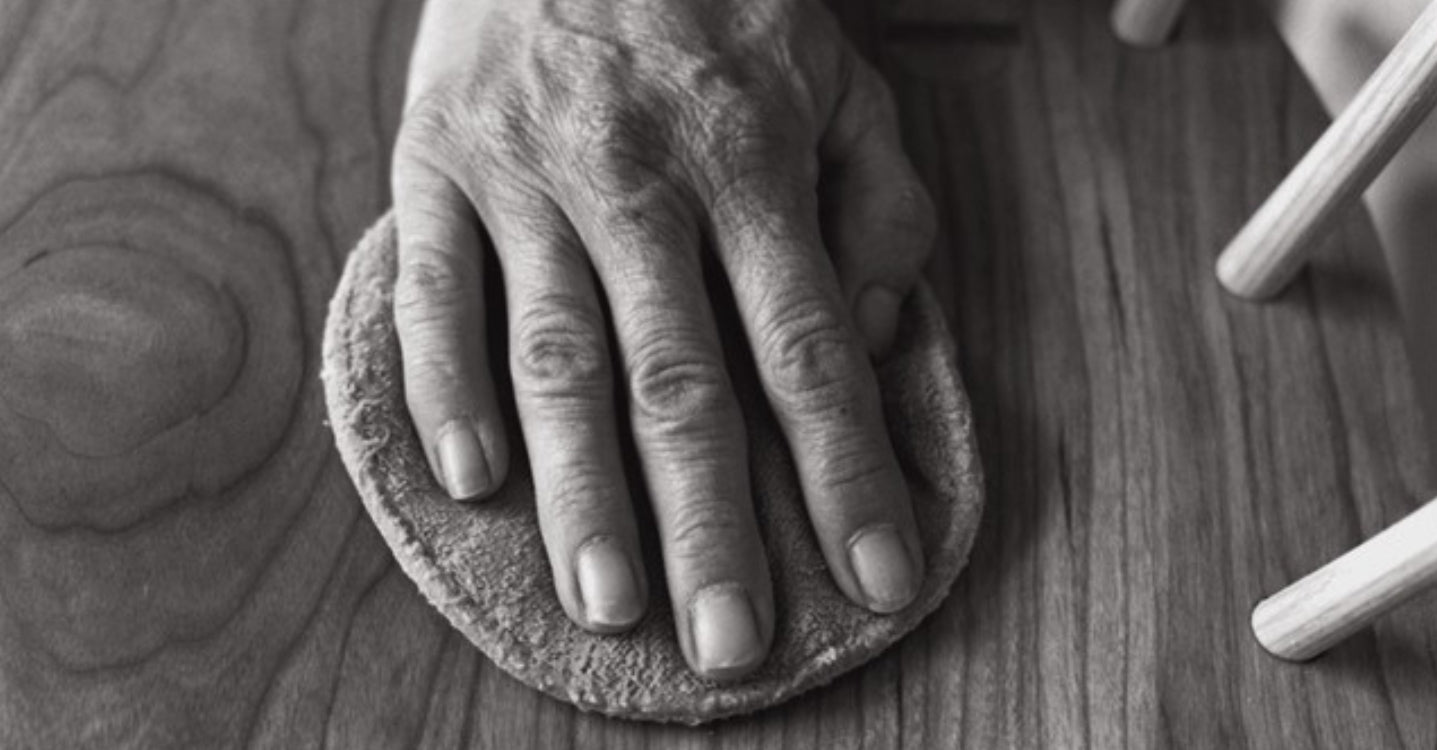
Care and cleaning for your wooden furniture is not a one-size-fits-all solution, and all-purpose cleaners are not formulated to enhance or maintain the beauty of solid-wood furniture. To clean up the confusion, we sat down with Marc LaBonte, head of our furniture maintenance and installation department, and asked him the best way to care for and maintain our hardwood furniture. Here’s what he had to say.

Above: Aria Sideboard in cherry.
Can I use an all-purpose cleaner or furniture polish?
“I don’t recommend these products, and here’s why.”
I know these products have been around for years, but the challenge they pose to our hardwood furniture is that they break down the finish, particularly wax, much more rapidly than if you used a clean, damp cloth. When furniture polish, oil soaps, citrus oils, or multi-purpose cleaners are used regularly, they can create a dull, streaky look to the furniture and eventually build up on the surface. This creates a milky or sticky surface and can lead to cracking and peeling of the finish. These products are designed to give a quick, beautiful shine, and they do, but they also contain added driers that, after a few days, result in a dull, lackluster appearance on your furniture. Instead of cleaning and polishing your furniture, you’re essentially thinning and drying out the protective barrier between the elements and the wood when you use these products.

Above: The Wishbone Table, Cumberland Chair, and Cumberland Sideboard.
Lemons, vinegar, and olive oil?
“Great for salads, not for furniture.”
I completely understand not wanting to use harsh chemicals in your home, but the best way to clean your furniture is with a dry or damp cloth. The only time I recommend using olive oil on your hardwood furniture is if you are trying to remove an adhesive, like tape or if your child accidentally puts a sticker on your table. Olive oil will help break down the adhesive, making it easier to wipe it off the surface. To remove a sticky substance with olive oil:
1. Use a liberal amount of olive oil on the affected area and allow it to rest for up to three minutes.
2. Wipe away with a warm, damp cloth.
3. Continue to clean with a cloth until the oil, sticky substance, and moisture have been completely removed from the surface.

Above: The Pasadena Rocker
When should I rewax my furniture?
“When it starts looking dry or rough to the touch.”
Most pieces will rarely need to be rewaxed. Those that receive the most wear and tear, like tabletops, chair arms, or wooden seats, are the most notable surfaces to show signs of needing to be rewaxed. When the surface begins to look dry, shows raised wood fibers, or feels rough to the touch, that’s a good indicator that your furniture needs to be rewaxed. The furniture should feel silky smooth. To flatten raised fibers, use a standard piece of white printer paper or 1200-grit sandpaper, working with the grain to smooth them out. Another indication that the surface needs refinishing is when moisture leaves a “wet” mark on the furniture. This means the finish has deteriorated, and it is time to reapply. However, if condensation or liquid beads up on the surface, there is still plenty of finish on your furniture.

Above: The Intervale Table, Thos. Moser Continuous Arm Chair, and Freeport Bench
What should I know when I first get my furniture?
“Furniture ages most quickly within the first year.”
From the moment a customer gets their new furniture inside their home, they should consider keeping it away from direct sunlight, hot objects, and heat sources. Sunlight can unevenly bleach out walnut or darken cherry in a matter of hours, leading to dark or bleached rings appearing where a lamp base or placemat covered the surface. The aging process happens most rapidly within the first year of owning the furniture. If possible, place the furniture in a location that avoids direct sunlight. If you put a vase, lamp, or computer on your new furniture, be sure to move the objects around, so you don’t get sunspots. We want our customers to use their furniture from the moment it arrives, but being aware that natural hardwood ages with exposure to light and air can help keep their furniture looking great for years to come.

Above: Vita Three Place Sofa, Vita Credenza, Chaise
If you could give one piece of sage advice, what would it be?
“Know your finish.”
Cleaning furniture with oil and wax. Thos. Moser has been using oil and wax finishes for years. It has breathability, and with reasonable care and maintenance, a wax finish will remain intact for generations. It is, however, a natural finish that breaks down more quickly—and I say this cautiously—as wax really rubs off from use and wiping, especially on high-use surfaces like tables and chair arms. To keep your wax-finished furniture clean, dust the furniture regularly with a soft, dry cotton cloth. Should you need to clean the surface because of a spill or food crumbs, use a soft, damp sponge or cotton cloth to wipe away any grime. Be sure to dry the surface thoroughly so watermarks and streaks do not appear.
Cleaning furniture with catalyzed lacquer or conversion varnish. These finishes are more resistant to water, solvents, and household chemicals and require less routine maintenance than wax. It is best to dust varnished or lacquered furniture regularly with a soft dry cloth. For spring cleaning, the best way to remove excess grime that may have settled over the winter is to wipe it down with a soft cloth that has been soaked in warm water and wrung out until slightly damp. Always work in the same direction as the grain pattern. If any moisture remains on the furniture’s surface, use a soft, dry cloth to wipe it up.

The Drift Lounge Chair and Ottoman paired with the Vault Table
How do I care for minor scratches?
“I use linseed oil.”
We tell people to use our furniture. This means scratches, dings, and dents are prone to happen. For light scratches to the surface, I recommend using linseed oil. Working in the woodgrain direction, gently rub the oil into the surface of the scratch. While this does not remove the scratch, it will create a protective barrier. Linseed oil requires a longer dry time, so if possible, apply when you can set the furniture aside for a few days. Anything beyond a minor surface scratch, like a gouge, ding, or water damage, is a more significant repair job. I recommend that customers call our customer care team to schedule in-home furniture service for these types of repairs.

Above: Chaise and Element Bookshelf
Wait, you do in-home furniture care?
“Oh yeah, absolutely.”
I’m on the road three weeks a month, traveling up and down the East Coast doing all kinds of furniture care. I’ve done everything from swapping out a drawer pull to replacing a spindle to refinishing a conference table. I also offer consultations for the best approach and care for our customers’ furniture. It is one of the best parts of my job—meeting our customers and seeing how our furniture has made their house a home.
If you have a question about how to care for our furniture or require an in-home service, we invite you to contact us and schedule an appointment.


