

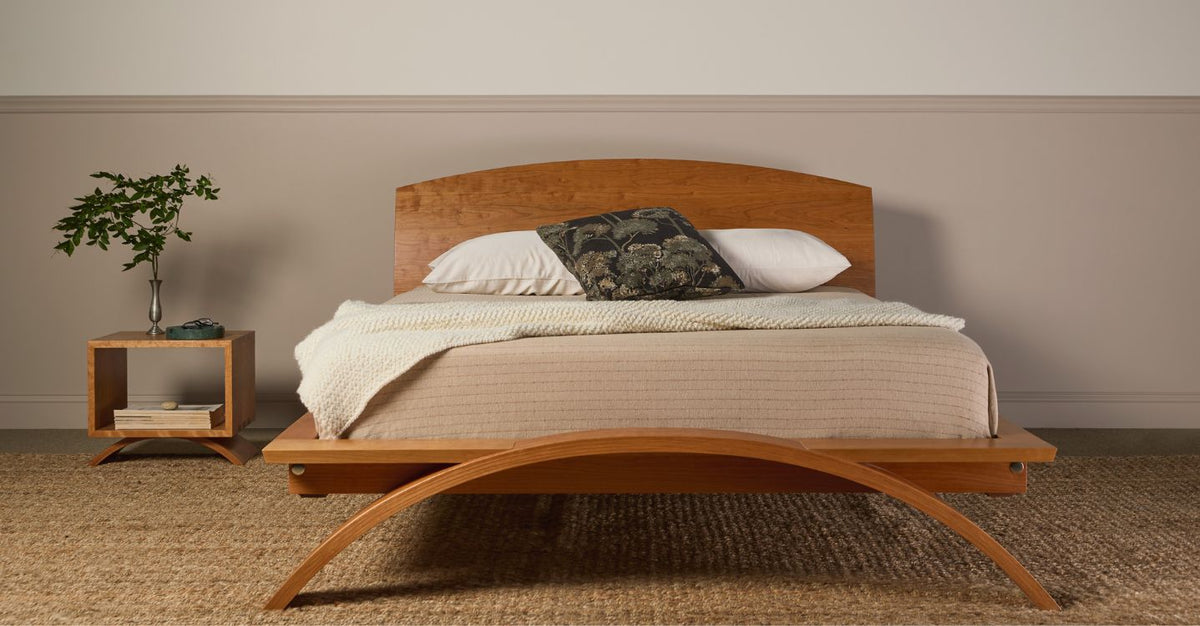
For Steven and Kristin Devor, their appreciation for Thos. Moser began with a catalog. Nearly 35 years ago, while a graduate student, Steven came across an advertisement for the company and requested a catalog. In the years that followed, more catalogs arrived in his mailbox—what he now calls his “dream books.” They offered an introduction to a way of making that felt distinct: furniture shaped by proportion, material, and the discipline of the human hand.

“It was the beauty and purity of the lines, the way the wood is used to create magnificent pieces of functional art,” Steven says. He was also drawn to the story behind the work. Thomas Moser had begun his professional life as an academic, a detail that resonated with Steven, who has spent his own career in academia.
“I knew that one day, I would own at least one piece of Thomas Moser furniture. I loved that it was completely handmade, in the USA, by men and women fully dedicated to their craft.”

That day came years later. Steven met Kristin in 2009, and in 2011, the couple made their first purchase: a Lolling Chair and Ottoman in cherry with chocolate leather, along with a walnut Pasadena Rocker. The three pieces arrived together. As they prepared for their daughter's arrival, the Pasadena Rocker found its place in the nursery. There, it became part of the rhythms of early family life—used not simply as a chair, but as a place to sit, hold, soothe, and remember. This relationship between furniture and life continues to shape the Devors’ collection.

“We love beautiful objects—fine crystal, art, timepieces, and, of course, furniture,” Steven says. Their home reflects a preference for modern, clean, and uncluttered design, balanced by the warmth and depth of natural materials. Walnut and cherry sit comfortably alongside one another, their differences in grain and color adding character to the rooms. Over time, Steven and Kristin have given one another Thos. Moser pieces as gifts, often arriving as surprises. Each addition has its own place in the home, but the collection feels less like an accumulation than a record of the life they have built together
“There are no misses with a natural material like wood and how each species works together,” Steven says. “It is nature, it is natural, and it all works correctly together.”

“The Moser pieces are the stars of the show in our home,” Steven says.
Friends notice them, too. When the couple hosts, guests often comment first on the comfort of the furniture, then on the quality of its construction and the feel of the wood. The pieces invite use. Their surfaces are meant to be touched; their forms are meant to support the body; their materials are allowed to change with time.
And each piece carries another mark of its making: the signature of the person who made it.“It’s the icing on the cake,” Steven says. “Every piece should be signed, for they are works of art.” The signature is often the first thing the couple looks for when a new piece arrives.

For Steven, that small mark carries considerable meaning. It identifies the person behind the object and makes clear that someone stands behind the work. In a world filled with anonymous furniture, the signature offers something more lasting: provenance. That sense of continuity is central to what the Devors value. Their furniture is not intended to be replaced as tastes change or trends move on. It is meant to remain, acquire the marks of use, develop a patina, and become increasingly connected to the people and moments around it.
“You’ll never regret buying something that is beautiful, that you can use every day and can be passed down to your family members.”

For the Devors, the value of a Thos. Moser piece is ultimately measured in time. The maker's time is expressed in the material, joinery, proportion, and finish. And there is the time that follows: years of daily use, celebrations, quiet moments, children growing up, and eventually the possibility of passing a piece to the next generation.
“We feel a sense of gratitude towards the craftsperson who made our furniture,” Steven says. That gratitude is part of the relationship. So is the permanence. In the Devor home, these pieces have become more than beautiful objects. They are part of the family’s history, made by hand, lived with over time, and valued for the possibility that they will continue to have a place in the lives of those who come next.

The Devors' meeting maker, Brenda Swett, on their visit to the workshop.


