Skip to content

MADE BY HAND. SIGNED BY THE MAKER. ONE DESIGN AT A TIME.

HANDMADE AMERICAN FURNITURE

Journal

Our History
Design

Our History

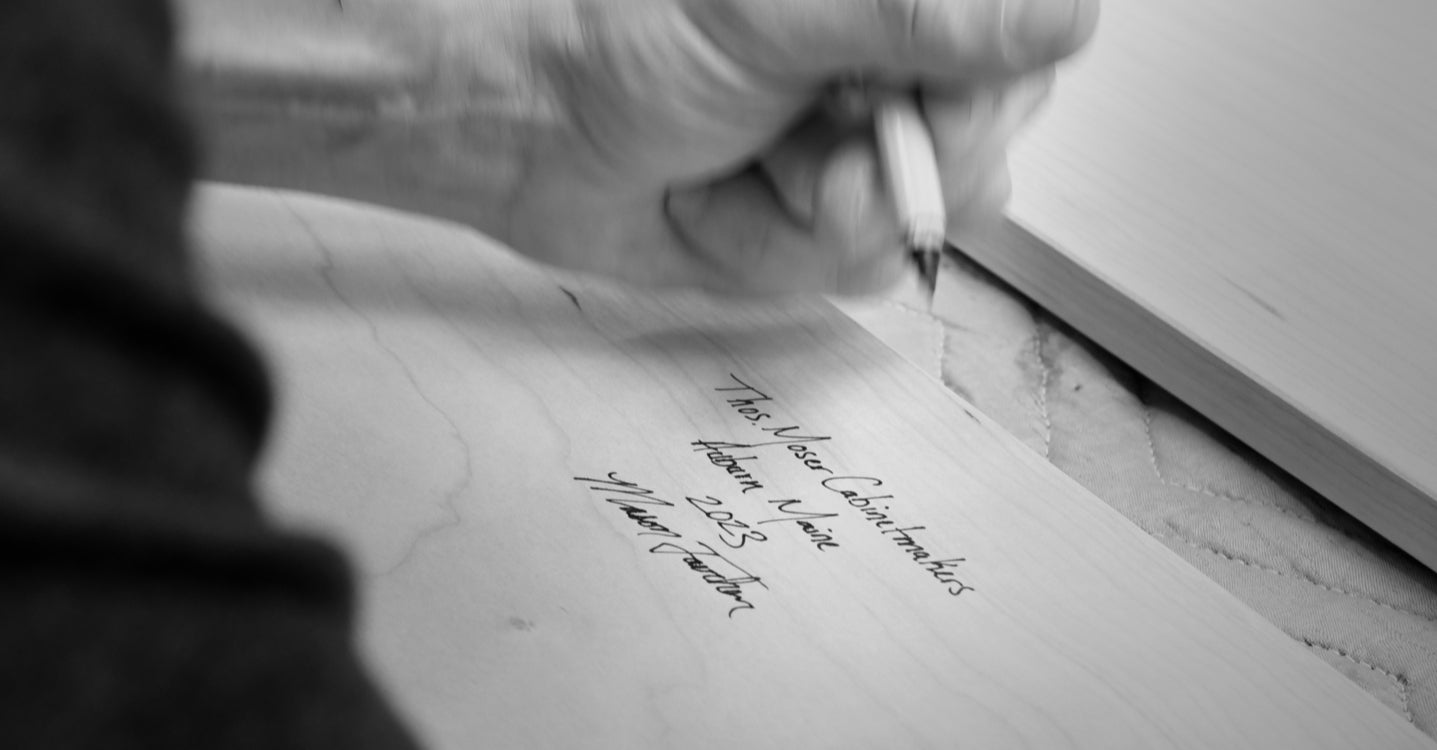
Very few of us can remember a turning point in our careers as vividly as Thomas Moser did. It was a cool September morning in 1971 as the brilliant late summer sun beat down on a table he had just built and brought up from his dingy cellar workshop. Freshly finished with boiled linseed oil and hand-rubbed wax, the table practically glowed. A friend's wife stopped by, saw the table, and offered to buy it on the spot. It was just one moment, but it was also an epiphany in the truest sense of the world. In an instant, at age thirty-six, Tom knew he had enough artistry to produce something people would appreciate and buy. It wasn't long after that that he said to his wife, Mary," I am going to quit teaching. I am going to make things out of wood." She fully agreed.   Thomas Moser standing outside the Grange Hall in New Gloucester, Maine.     A Leap of Faith   In 1972, Tom left his tenured teaching position at Bates College and, with his wife Mary by his side, opened a small woodworking shop in an old Grange Hall in New Gloucester, Maine. They called it Thos. Moser Cabinetmaker. There was no formal business plan, only an abiding love of wood and a belief in honest craftsmanship. From the beginning, each piece carried a promise—a satisfaction guarantee reflected Tom’s conviction that furniture, when made by hand with care and integrity, should last a lifetime. By 1973, with Mary Moser at the helm of marketing, among a laundry list of other duties, Thos. Moser placed its first advertisement in Down East magazine and The New Yorker, introducing a wider audience to furniture built with purpose, restraint, and heart.   A Vision for the Future   Throughout the 1970s and through the 1980s, the workshop quietly established its foundation. Innovation was never pursued for its own sake—it existed only to serve integrity and craft. In 1977, Thos. Moser began hand-signing every piece, a tradition that endures today as a mark of accountability and pride. That same year, Tom designed the Continuous Arm Chair, a form both sculptural and inviting, which became one of the company’s most enduring designs.   As demand grew for Tom's designs, so did the workshop. The first showroom outside of Maine opened in the early 1980s, and in 1987, the company moved into a larger workshop in Auburn, Maine, which remains our home base to this day.        A Name Known Beyond Maine   By the 1990s and 2000s, Thos. Moser furniture reached far beyond New England. Tom’s son, David, joined the design process, introducing collections such as Vita, Pasadena, Wing, and Chaise, while classic pieces like the Harpswell and Auburn chairs became quietly iconic for their balance, restraint, and comfort. In 2007, the company launched the Customer In Residence program, inviting customers into the workshop to build their own furniture alongside master craftspeople—a testament to the belief that making deepens connection and appreciation. Thos. Moser furniture has been requested for official ceremonies by Pope Benedict XVI and Pope Francis, chosen for presidential libraries by both Reagan and Bush, and now graces Ivy League campuses, public libraries, private schools, and homes worldwide. In 2018, the New York Public Library commissioned a chair that has become an enduring symbol of the institution.           Passing the Torch In 2016, leadership passed to the next generation when Aaron Moser was named CEO, guiding the company forward while remaining rooted in its founding principles. In 2022, Thos. Moser marked its 50th anniversary—five decades of building furniture defined by thoughtful design, traditional joinery, and individual workmanship. In January 2025, after more than half a century of family stewardship, Thos. Moser entered a new chapter under a Maine-based company that aligned with its values of craftsmanship, sustainability, and long-term vision, ensuring the work remains grounded in place and purpose.        Crafted for Generations From a single Grange Hall in New Gloucester to workshops, showrooms, and homes around the world, Thos. Moser's story is more than one of growth. It is a philosophy made tangible: that beauty lies within restraint; that integrity reveals itself over time, and that objects we live with should be built to last a lifetime.

LEARN MORE
Wood Moves
Living with Furniture

Wood Moves

Designing furniture with solid wood demands patience and respect for its unique traits, ensuring each piece endures a lifetime with character and strength.

LEARN MORE
Five Things to Consider When Buying a Dining Chair
Living with Furniture

Five Things to Consider When Buying a Dining Chair

There’s a science to comfortable sitting. The truth is, there is no one-size-fits-all for dining seating. For some, it comes in the form of an upholstered seat that perfectly matches a favorite rug or a hand-sculpted wooden seat that tucks neatly under the edge of the table, allowing for maximum use of the room before and after meals. And for others, it’s a bench that can be pulled from the entryway or living room to accommodate a few extra guests for a neighborhood supper.   The Eastward Side Chair and Eastward Bench   Height One of the best places to look when you begin to select your dining room seating is your table itself. What is the height of your table? With this measurement, selecting or customizing seating that will perfectly place you at the table will easily fall into place. Most dining tables range in height from 28 to 31 inches. Many of our tables fit comfortably within this range at 30 inches high. Our dining chairs will average in height, from the top of the seat to the floor, from 17 to 21 inches high, leaving you with a distance from the seat to the tabletop ranging from 8 to 14 inches. The average person will find a seat-to-tabletop distance of around 10-12 inches most comfortable.   Most dining tables are 28" - 31" high. The average seat height from the floor is 17 " - 20". The average height from chair seat to table top is 10" - 12".   There are a few things to consider with these measurements. First, what is the thickness of the tabletop itself, and if there is an apron around the table, how far does that extend toward the floor? Be sure to account for these measurements, especially if you select chairs with armrests.     The Wishbone Table, Cumberland Chairs, and Cumberland Sideboard Depth The depth of a dining chair influences two important aspects of comfort and function: how far the chair will tuck beneath the table when not in use, and where you will naturally sit in relation to the tabletop when seated. A chair with excessive depth may prevent the chair from sliding fully under the table, while also positioning the sitter farther back than intended. In some cases, this can cause the sitter's legs to come into contact with the table’s pedestal or trestle base. Thoughtful chair proportions help ensure both comfortable seating and ease of movement around the table.   How to Select the Right Number of Chairs Determining how many chairs can comfortably fit around a dining table begins with understanding proper spacing. As a general guideline, allow approximately 28 inches between the centers of adjacent seats to give each guest adequate personal space and freedom of movement. It is also important to maintain at least 2 inches between chairs so seating does not feel crowded. For chairs placed at the ends of the table, allow roughly 14 inches from the seat center to the tabletop edge to create a balanced and comfortable arrangement. Using these measurements helps ensure the table feels welcoming, functional, and proportioned for gathering.   The Boat Top Table and Harpswell Side Chairs with back.   A Chair's Footprint The chair’s footprint is the width and depth of the chair. For some chairs, especially if they have a splayed or bowed leg, this measurement will include the furthest two reaching points of the legs. When deciding how many chairs to place along the length of the table, it’s helpful to know the width of the chairs so you can be sure there's enough clearance underneath without bumping into each other or the table's base. If the chairs touch when tucked underneath, your guests can feel cramped. Generally, allow 28 inches from the center of the seat to the next to comfortably accommodate most people or at least 2 inches between chairs. For chairs at the end of the table, allow 14 inches from the seat center to the end of the table.     Upholstery: The Softer Side of Dining Chairs  Upholstered chairs offer a variety of ways to express one's style. They can be a wonderful way to tie colorful elements of the room together or offer a neutral palette for the eyes to rest. A few of our chairs, Aria and Harpswell, offer upholstered cushions for added comfort. Our fabric selections range from fine leather, like our full-grain Riverside, ideal for heavy to medium use, to some of our most durable upholstery materials.     The Pasadena Side Chair and Aria Arm Chair    Arm Chairs and Side Chairs Many of our chairs come as both side and arm chairs. If you prefer your chairs to sit fully under the table top, we recommend choosing a table design without an apron. Two of our favorite armchairs that do slide underneath our tables without an apron are the Harpswell chair and the Eastward Chair. For a sleeker companion to an armchair, our side chair offers the same exquisite design and style.  Another consideration when choosing chairs is the difference between the table height and the overall chair height. The overall height of your chair is measured from the top of the crest to the floor. How high is the crest of the chair in comparison to the top of the table? Unless you are selecting stools as your seating, you’ll want the crest of the chair to be roughly 1 inch to 2 inches higher than your tabletop, giving visual intrigue to your dining set.     The Intervale Table, Continuous Arm Chair, and Freeport Bench  Alternative Seating Beyond the classic dining chair, you have options. Benches and stools offer an alternative to traditional seating and can be moved into another room when additional seating is required. Many of our benches and stools seamlessly pair with our dining tables and are customized to fit your dining situation. Our smaller, studio-sized chairs and 18" stools can easily slide underneath the table when they are not in use, and benches, like our Edo, Eastward, Freeport, and Vita, can be moved into a living room or hallway, allowing for flexible use of your furniture when it is not needed at the dining room table.   The Eastward Bench and Trestle Table      When you begin to think about adding the perfect chair to your space, remember these basic guidelines: height, overall footprint, and upholstery. Know your style and know your space. With these guidelines in your back pocket and our team of knowledgeable furniture specialists willing to help you, the hardest part will be deciding which one to choose.  

LEARN MORE
Our Materials
Living with Furniture

Our Materials

Selecting the right materials for our pieces is essential. We source only the finest-quality lumber, fabrics, leathers, and finishes, and put considerable effort into building relationships with partners whose values and quality align with our own. The wood, fabric, and leather we choose define not just the look of a piece, but how it ages, feels, and lives with you over time. Thos. Moser sources only the finest lumber, textiles, and hides, partnering with suppliers whose standards align with our dedication to durability and beauty.      Wood Species As woodworkers, we consider our materials inseparable from the environment. There is no substitute for the character of the wood that comes from a mature tree. Each is a product of its unique habitat, and the grain, color, markings, and variation are a roadmaptree'se tree’s story. No two trees, boards, or pieces of solid wood furniture are identical. Here are some characteristics of the wood we use at Thos. Moser. We work with premium-grade North American hardwoods — predominantly cherry and walnut. On occasion or upon request, we also work with a range of other sustainably sourced American hardwoods. Crafting furniture from different species can impart distinct characteristics. For example, the dark tone of walnut can emphasize form. At the same time, the pronounced grain of ash conjures a more tactile experience, and the darkening of cherry over time may lend a more classic, traditional look and feel.  Cherry Cherry wood is beloved for its rich tones, timeless appeal, and ability to develop a deep patina over time. In 1976, cherry became synonymous with the Moser style. Today, it remains the most popular North American hardwood we use when building our furniture. The black cherry tree thrives in cooler, northeast-facing environments with well-drained, fertile soil. With its gentle sloping hillsides, the Allegheny plateau provides the rich, well-drained soil and consistent moisture needed for a cherry tree to send out a pioneering taproot and grow to be nearly 80 ft tall.      Aging When freshly cut or sanded, cherry is pale tannish pink, as shown in the first square above. But the wood is rich in resins, particularly prussic acid, which reacts rapidly with sunlight and oxygen. Through oxidation and UV exposure, the color of cherry shifts from a light salmon to a deep, rich auburn — a transformation that can occur in as little as six months and continues to develop over time. Cherry will darken over time, whether or not it receives a coat of oil. However, when oil is applied to fresh cherry, it amplifwood'se wood's depth and color by highlighting tstructure'sucture's reflectivity, giving it a three-dimensional shimmer.     Above: Wing Three Place Sofa and Vault Table in cherry.   Walnut As the only native dark wood in North America, black walnut covers an impressive swath of land extending from southern Ontario to South Dakota, northern Florida, and eastern Texas. Our walnut trees come from the banks of the Missouri River. Here, acidic and loamy soils produce trees that can grow upwards of 2ft a year and reach over 120ft, with an equally impressive canopy when fully mature.      Aging Walnut is prized for its rich, bittersweet color range, from chocolate to deep burgundy. When finished with a coat of oil, the rich ripples of espresso and almond become immediately apparent. Unlike cherry, maple, or ash, the walnut ages and lightens in color. This process does not happen as quickly as it does with cherry, but over several years, those deep chocolate hues will mellow into an ambered brown.    Above: Intervale Extension Table and Cumberland Chairs in walnut.   Alternate Wood Species On occasion and upon request, we work with sustainably harvested ash, maple, and white oak sourced from mills in Maine, New Hampshire, and New York. The northeast produces the finest northern hardwoods in the United States, and we are pleased with the consistently superior quality of the material our trusted partners provide.           Above: Fahmida Lounge Chair in white oak.   Upholstery   At Thos. Moser, we select upholstery materials with the same care as the woods used to craft your furniture, which is why our leathers and fabrics are warrantied against material defects for five years (please note that we cannot warranty the performance of customer-provided materials). We feature our most popular upholstery and leather options on our website, and if you’re interested in additional colors, prints, or textures, or would like to supply your own fabric, we invite you to arrange a consultation with a sales associate, as the right upholstery choice ultimately reflects both your lifestyle and the aesthetic you want to create. Rub ratings, or double rubs, also known as the Wyzenbeek test, measure how well a fabric stands up to everyday wear through industry-standard abrasion testing, with lower ratings suited to decorative or light-use pieces and higher ratings indicating durability for daily living and high-traffic spaces, helping ensure the right balance of comfort, beauty, and longevity over time.    Fabric We carry a vast selection of premium quality fabrics from the world’s leading textile manufacturers. Our design-driven options ensure that you find just the right fit for your style and décor. To assess our many fabric options or to request a swatch, visit your nearest showroom or contact us to arrange a consultation with a sales associate to determine the best choice for you.             Working with Leather    We hand-select and carefully inspect our leather to ensure unrivaled quality, softness, durability, and overall character. Our Riverside line of micro-finished top-grain leather offers a sumptuous feel from day one. It is available in a contemporary color palette, making it an ideal candidate for any application. We feature our most popular leather colors in the pieces shown in our print catalogs and online. If you do not see a color you would like, or are interested in other protected or aniline leathers, please get in touch with us to arrange a consultation with a sales associate.          Above: Wing Three Place Sofa, Drift Lounge Chair & Ottoman, Vault Table, and Thos. Moser Continuous Arm Chair   Our materials shape every decision, from proportions and joinery to surfaces and finishes. Wood, fabric, and leather each carry inherent properties that guide how a piece is made and how it lives over time. When those materials are selected with care and used with intention, the result is furniture defined by clarity, restraint, and longevity—made by hand through practice and patience, and built to remain useful, relevant, and considered for generations.     

LEARN MORE
Sustainablity
Living with Furniture

Sustainablity

If there’s a common core to all our work, it is our appreciation for the beauty and versatility of North American hardwood. Since the beginning, we have been committed to using the finest materials available. The raw materials we work with are an essential element to our furniture-making success, and as woodworkers, our materials are inseparable from the environment.  Wood is a natural and noble material. One that is minimally processed from start to finish, and the color, figure, and texture cannot be replicated by artificial means. The trees we use for our furniture have a life of their own. Each board is the product of the tree’s environment—the soil, light, mineral content, and environmental stressors contribute to the wood's distinctive look and design. At Thos. Moser, we could tout our commitment to sustainability- but from our perspective, the definition falls short of what the concept means to us. Sustainability isn’t just a word, after all. It’s an ethos. It is our homage to the beauty and strength of the wood we use and the makers who transform it.   “Sustainability means building for a lifetime – or longer. It means the survival of techniques learned through centuries of craftsmanship. And it means a livelihood for the people who keep that craftsmanship alive.” – David Moser, Thos. Moser Designer   We have dedicated decades to assessing the nature of American hardwoods by running our fingers along the grain and breathing in the bright, tangy scent of newly sawn boards. There is no substitute for wood from mature trees, and we go to great lengths to ensure access to the highest-quality hardwoods that meet the needs of both current and future generations.   Where clear-cutting was once seen as a birthright, silviculture, which is the art and science of conservation and sound forest management, dictates modern-day harvesting practices. These practices control growth and health while protecting vital wildlife habitats and water resources. In forests where clear-cutting or high-grade cutting takes place, the best trees are cut, leaving behind fewer healthy trees and creating a depleted ecosystem. In uninterrupted forests, trees become crowded and compete for resources, leaving them susceptible to disease, invasive species, and decaying trees releasing their sequestered carbon back into the atmosphere.   1. Clear-Cutting: Traditional large patch clearing that removes a large stand of living and dead wood from an area. 2. Seed Tree and Shelterwood Cutting: This style of cutting leaves approximately six to twelve trees per acre in such a way as to ensure adequate natural regeneration. 3. Sustainable Forestry Cycle: A cyclical harvesting style that allows for various ages of trees to grow concurrently while mature trees are harvested, making way for smaller saplings to grow in their place.      Through selective harvesting, the forest’s biodiversity flourishes, enhancing its ability to provide clean water, sequester carbon, and provide habitat while also improving its resistance to invasive species and climate change. This means silviculture-managed forests improve species and structural diversity, as trees of multiple ages and sizes increase habitat and resilience. This process facilitates natural regeneration, where seedlings take hold under existing trees. Walking among the lush ecosystem that produces such magnificent trees, one stares up through the 70-foot canopy of mature black cherry, absorbing the smell of the earth and choir of birdsong, gaining a deeper appreciation for this wood species and the land it comes from.   To grow, a tree absorbs carbon and releases oxygen. Any carbon that is not released is stored within the tree’s fibers. Wood contains 8% moisture, and carbon accounts for 50% of the total dry weight of wood. One Thos. Moser Continuous Arm Chair weighs 12 lbs and sequesters 5.52 lbs of carbon.   The trees we use to build our furniture are at least 80 years old. When a tree reaches maturity, it can absorb roughly 48 pounds of carbon annually. Through photosynthesis, carbon is sequestered within the tree’s fibers, storing it as mass and, eventually, wood products. Carbon is released from the tree by a physical change in the tree’s composition, either through fire or decomposition. Once a tree starts to decay, it relies on oxygen and releases carbon back into the atmosphere. While the amount of carbon sequestered varies by species, wood is roughly 50% carbon by dry weight. Harvesting a mature tree and creating furniture that will last as long, if not longer than the tree, fosters a positive environmental impact by trapping carbon for generations. Our philosophy is to choose the best certified by the Forest Stewardship Council and to use them directly and respectfully. By doing so, we’re protecting one of the most resilient, diverse, and carbon-rich landscapes in the world. Since the 1950s, these forests have increased by 130%, and in Pennsylvania alone, sustainable harvesting practices have reclaimed twice as much forested land as a century ago.   Above: The Lolling Chair and Ottoman   When you invite a piece of solid wood furniture into your home, you’re celebrating the connection and harmony we find in nature. We find comfort in the synergy of craftsmanship and nature. By utilizing a respectful and sustainable harvesting process, we work to preserve the tree’s first home. Through mindful care and craft, it is then that we give the tree a second life with furniture that celebrates the beauty of the forests and rejuvenates its second home, your home, for generations.

LEARN MORE
Choosing a Bed at Thos. Moser
Living with Furniture

Choosing a Bed at Thos. Moser

Discover your perfect Thos. Moser bed with our guide and enjoy the restful sleep you deserve. 

LEARN MORE
Ash: The Right Wood in All the Right Places
Design

Ash: The Right Wood in All the Right Places

Renowned for its strength and resilience, ash wood lends both durability and comfort to Thos. Moser’s chair legs and spindle backs, blending beauty with lasting support.

LEARN MORE
A Designer's Touch: Where Craftsmanship Meets Personality
Home Tours

A Designer's Touch: Where Craftsmanship Meets Personality

Charlie and Maureen chose Thos. Moser furniture to celebrate the craftsmanship of Maine’s artists, blending beauty with meaningful heritage.

LEARN MORE